
If you’ve ever Googled ‘can you use azelaic acid and vitamin C together’, you’ve probably found a lot of conflicting opinions. Some sources say they cancel each other out. Others say they’re fine. The truth is simpler than the debates make it sound.
These two ingredients don’t compete. They don’t destabilise each other. And for melanin-rich skin dealing with dark spots and uneven tone, using both as part of a structured routine is one of the most effective strategies for combating hyperpigmentation.
Here’s what the evidence says, how to layer them correctly, and what you should realistically expect.
Yes, you can use azelaic acid and vitamin C together. They don’t interfere with each other, and they work through different mechanisms, making them more effective as a pair than either ingredient alone.
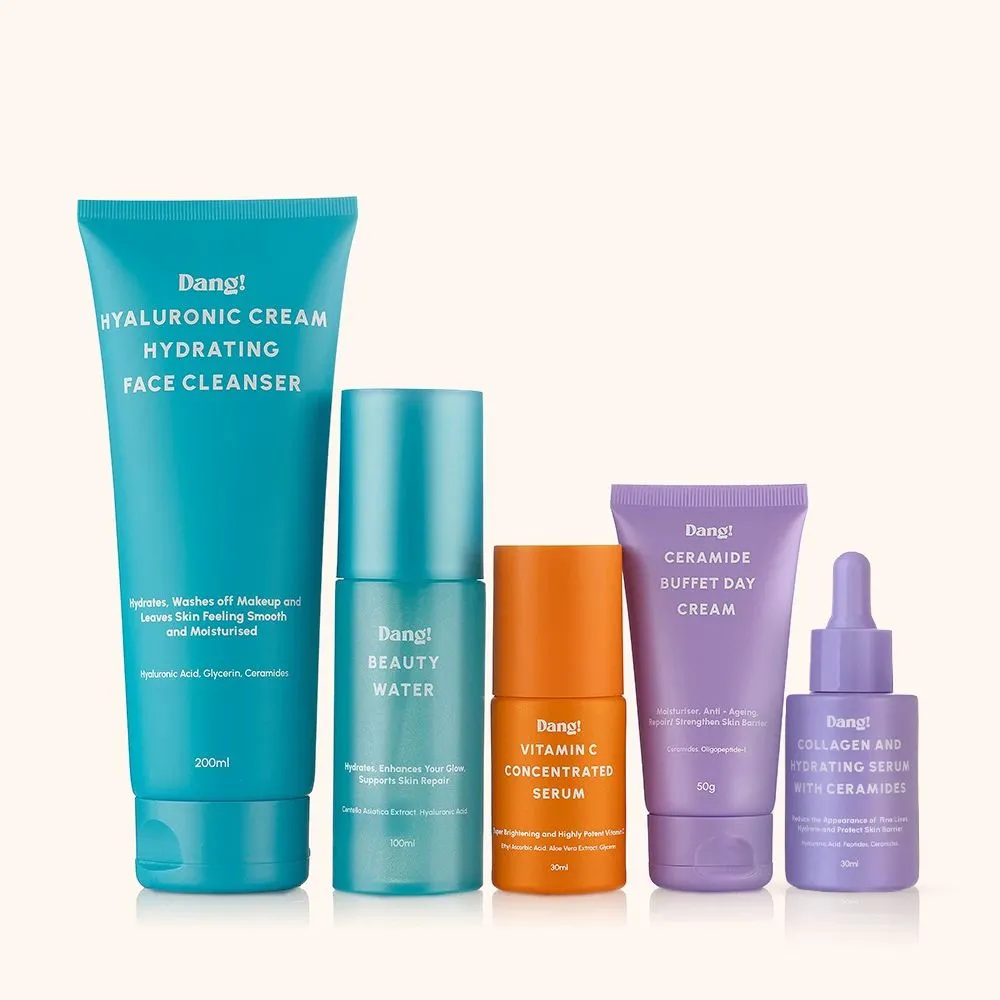
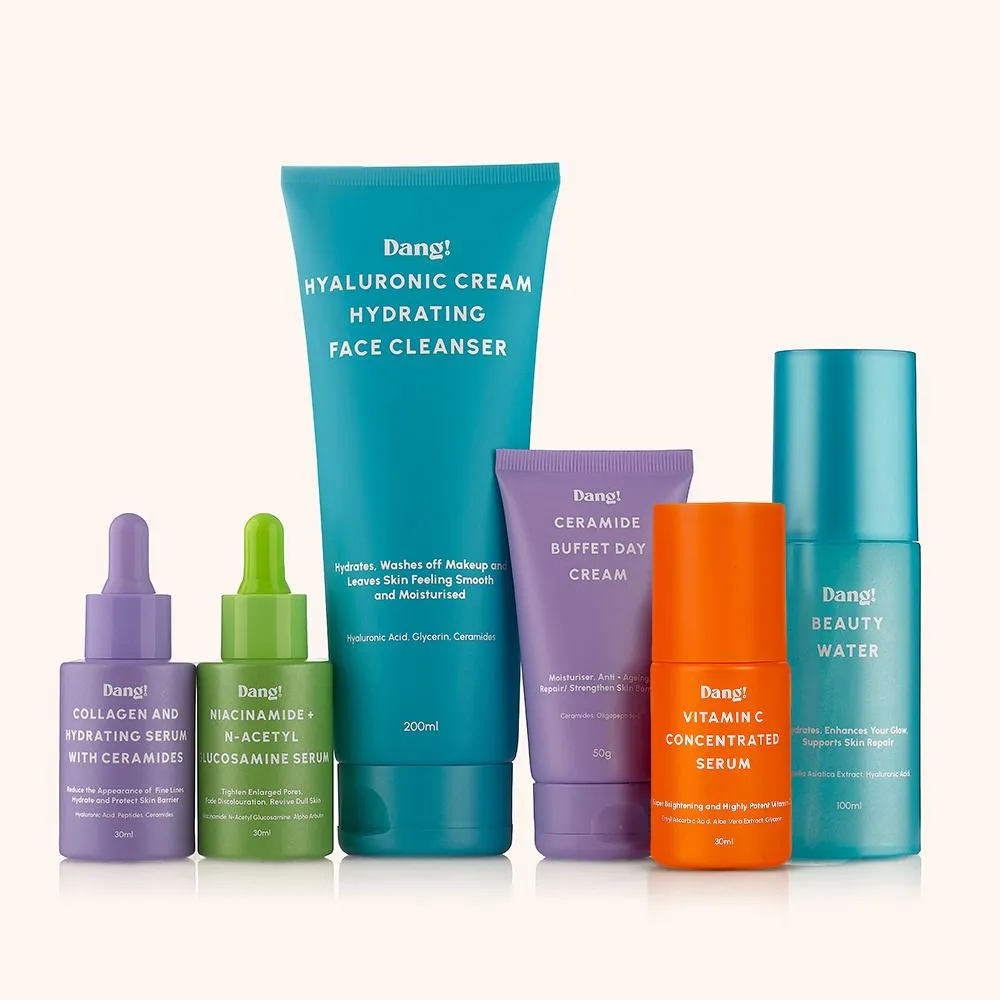
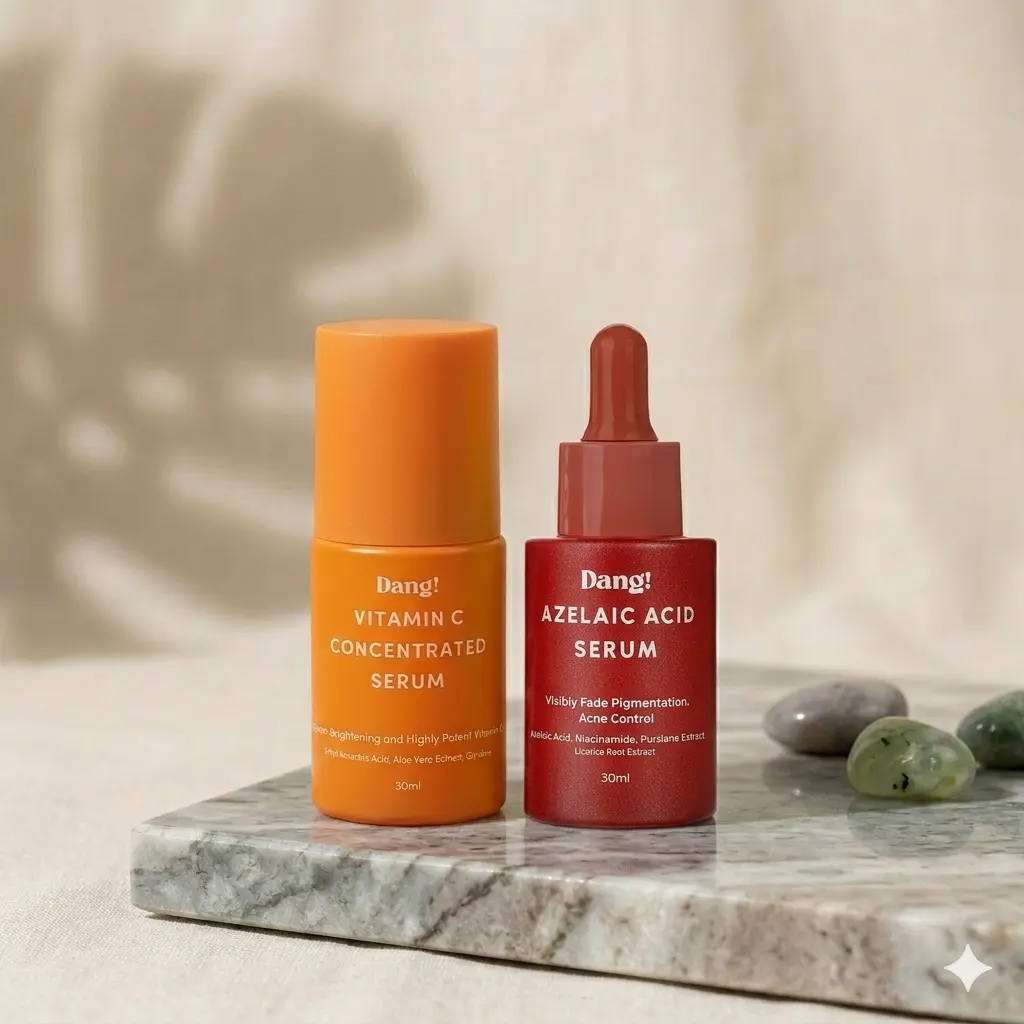
The best approach for melanin-rich skin is to use vitamin C in the morning and azelaic acid at night. Dang!’s Azelaic Acid Serum (PM) and Vitamin C Serum (AM) are designed to work as a complete day-and-night brightening system. They’re available to shop at our various store outlets and on our website.
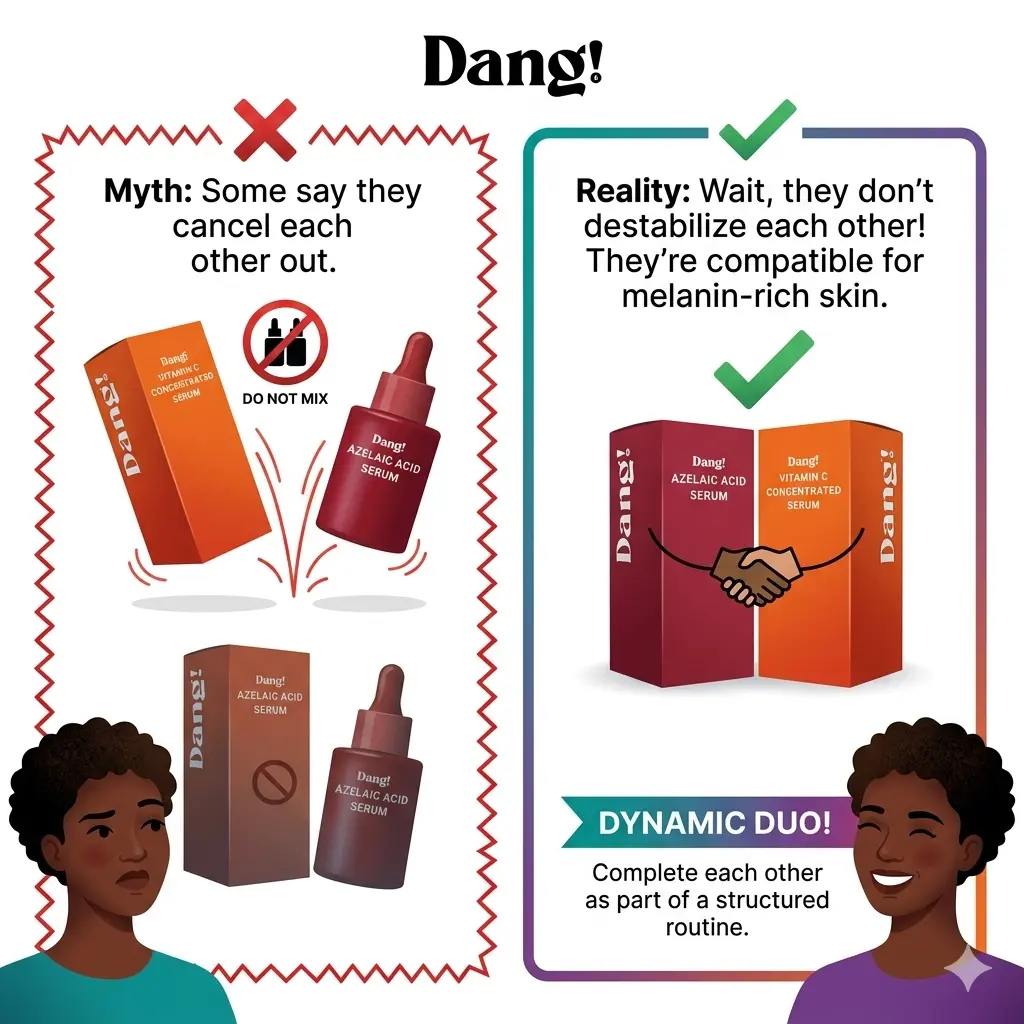
Yes. Azelaic acid and vitamin C are compatible. They don’t chemically interact in a way that reduces either ingredient’s effectiveness, and they work through different enough mechanisms that combining them addresses hyperpigmentation from two separate angles. The most practical approach is applying vitamin C in the morning and azelaic acid at night, although using both in the same routine is also safe.
The concern about mixing acids sometimes leads people to think any two active ingredients will cancel each other out. That’s not how it works. Azelaic acid and vitamin C don’t do either.
Vitamin C works primarily as an antioxidant. It neutralises free radicals generated by UV exposure, which would otherwise trigger melanin overproduction. Azelaic acid works primarily as an enzyme inhibitor. It blocks tyrosinase from producing melanin in the first place.
Two completely different mechanisms, both targeting the same problem at different points. That’s the definition of a complementary pair.
If you’ve been wondering about the differences between using azelaic acid versus vitamin C for hyperpigmentation as standalone options, this piece covers using both together as a system rather than choosing between them.
Shop the Dang! Vitamin C Serum and Azelaic Acid
A systematic review of vitamin C and melanin pigmentation published in PMC confirmed that vitamin C inhibits tyrosinase activity and reduces melanin content in a dose-dependent manner.
Crucially, vitamin C acts as a real-time antioxidant. When UV light hits the skin, it immediately generates reactive oxygen species (free radicals), which trigger melanocytes to start producing melanin. Vitamin C intercepts and neutralises these free radicals before they can initiate this pigmentation process. This immediate protective action is why vitamin C is most effective when applied in the morning, right before your skin is exposed to UV light.
Azelaic acid blocks tyrosinase through enzyme inhibition rather than antioxidant activity. It also has a powerful secondary effect: it reduces inflammation, which is both a trigger and a driver of post-inflammatory hyperpigmentation (PIH). In melanin-rich skin, where any inflammation can send melanocytes into overdrive, this anti-inflammatory action is often what makes the most visible difference.
See this guide on how azelaic acid works specifically for hyperpigmentation on melanin skin, to fully understand it.
| Azelaic Acid | Vitamin C | |
| How it works on hyperpigmentation | Blocks tyrosinase enzyme activity | Reduces tyrosinase via the antioxidant pathway |
| Benefits | Reduces inflammation, which causes post-inflammatory hyperpigmentation | Neutralises UV-triggered free radicals |
| Best time to use | Evening [PM] | Morning [AM] |
| Effect on new spots | Prevents via anti-inflammatory action | Prevents new spots from forming via antioxidant protection |
| Effect on existing spots | Fades via melanin production block | Fades via oxidation-reduction |
| Safe for dark skin | Yes | Yes |
| Pregnancy safe | Yes | Yes |
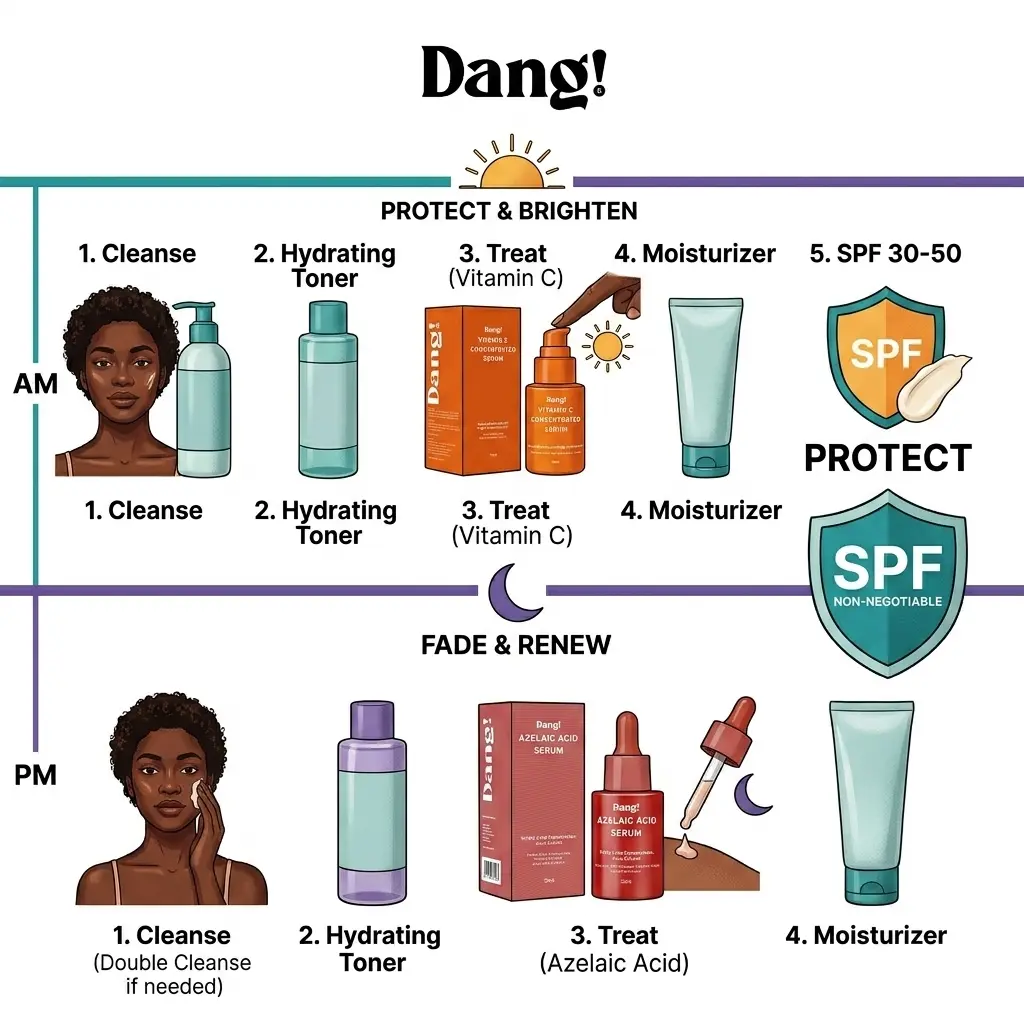
| Morning (AM)
1. Gentle cleanser 2. Hydrating toner 3. Dang! Vitamin C Serum 4. Moisturiser 5. SPF 30 to 50 (non-negotiable) |
Evening (PM)
1. Double cleanse (if wearing SPF) 2. Hydrating toner 3. Dang! Azelaic Acid Serum 4. Moisturiser |
A few things to understand about this structure:
Use Vitamin C in the morning for optimal UV protection. Apply Azelaic acid at night, as evening use enhances brightening effects and simplifies daily incorporation. Daily SPF is mandatory with both ingredients; without it, new pigmentation will outpace fading.
For stubborn hyperpigmentation on melanin-rich skin, a two-stage approach is needed because single ingredients are often insufficient. Dark spots on darker skin are deeper and more persistent due to a stronger melanocyte response to inflammation, residing in both the epidermis and dermis.
Additionally, UV exposure continuously re-darkens existing spots. A morning Vitamin C serum provides real-time UV protection, while an evening Azelaic acid serum handles fading and overnight inflammation. Each ingredient is necessary for the full effect.
See this guide on the best serums for hyperpigmentation on dark skin to find out more ingredients you can incorporate into your routine.
Results vary based on the depth of existing pigmentation, how consistently you use both products, and critically, how well you protect your skin with SPF every morning. On melanin-rich skin where UV constantly re-triggers melanin production, skipping sunscreen effectively halts progress regardless of what actives you’re using at night.
If you’re new to azelaic acid specifically, it’s common to notice a little purging in the first 3 to 4 weeks. If you want to understand what that looks like and when to be concerned, this guide on whether azelaic acid causes skin purging covers this in detail.
All in all, here’s what to expect using this combination.
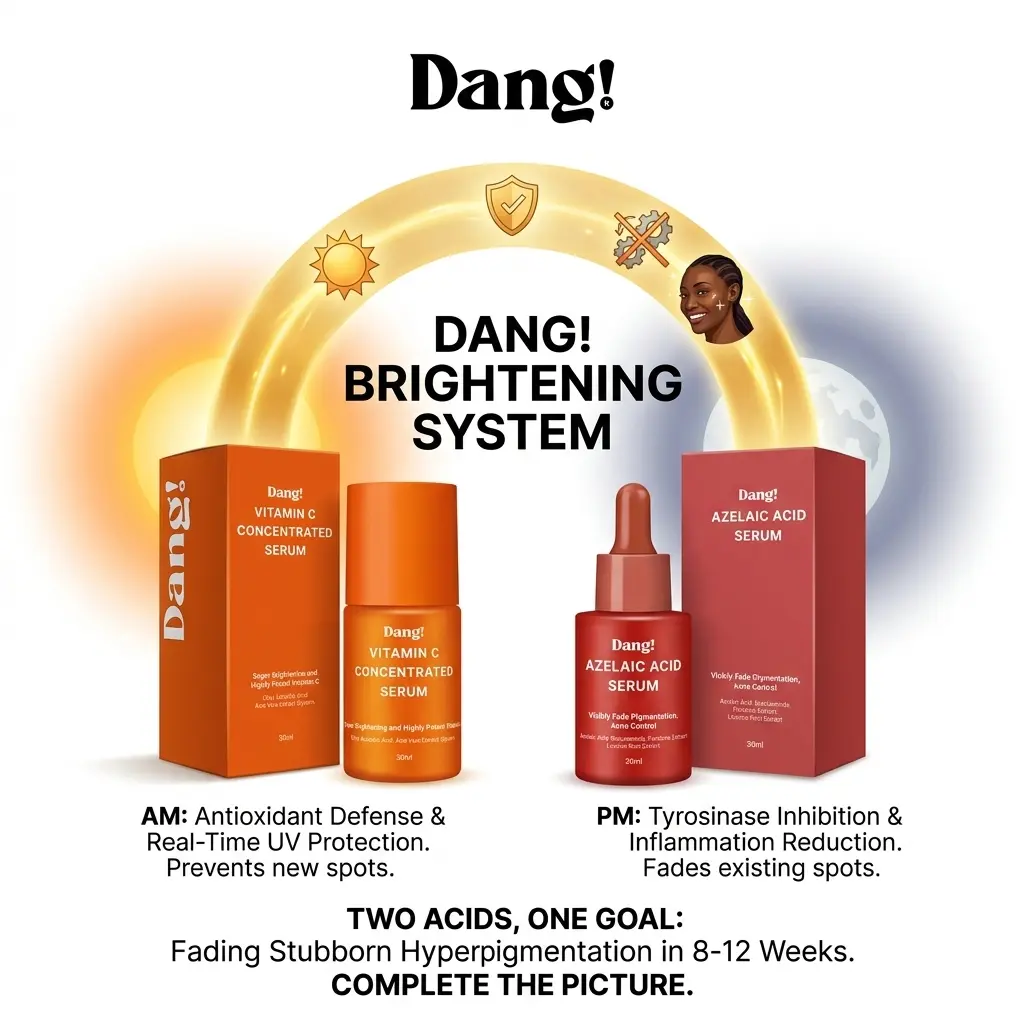
Dang!’s azelaic acid and vitamin C serums were built to work as a system. The azelaic acid formula already layers in 5% Niacinamide, Licorice Root, Bearberry, and Purslane for a four-mechanism brightening approach in the evening product. The vitamin C serum provides the antioxidant daytime protection that completes the picture.
Azelaic acid and vitamin C don’t just coexist in a routine: they make each other more effective by covering different sides of the same problem. Vitamin C handles UV protection and antioxidant defence in the morning. Azelaic acid handles inflammation reduction and melanin production inhibition at night.
For melanin-rich skin where dark spots are more persistent and UV constantly re-triggers the cycle, this two-product approach is the most effective over-the-counter solution available. Give it 8 to 12 weeks with consistent SPF. The results will be visible.
Avoid combining azelaic acid with high-strength exfoliating acids like glycolic or lactic acid in the same routine, as this can increase irritation and compromise your skin barrier.
Azelaic acid is generally more effective for acne because it reduces inflammation, unclogs pores, and targets acne-causing bacteria, while niacinamide mainly supports oil control and skin barrier function.
Yes, the combination still works in this order. The only limitation is that vitamin C’s antioxidant protection is most valuable during the day when your skin faces UV exposure. Used at night, it still contributes to brightening, but you lose that real-time UV protection benefit.
Vitamin C should not be combined with strong exfoliating acids or benzoyl peroxide in the same routine, as this can reduce its effectiveness and increase skin irritation.
Yes, azelaic acid can be used every day once your skin has adjusted, but it’s best to start a few times per week and gradually increase frequency to avoid irritation.